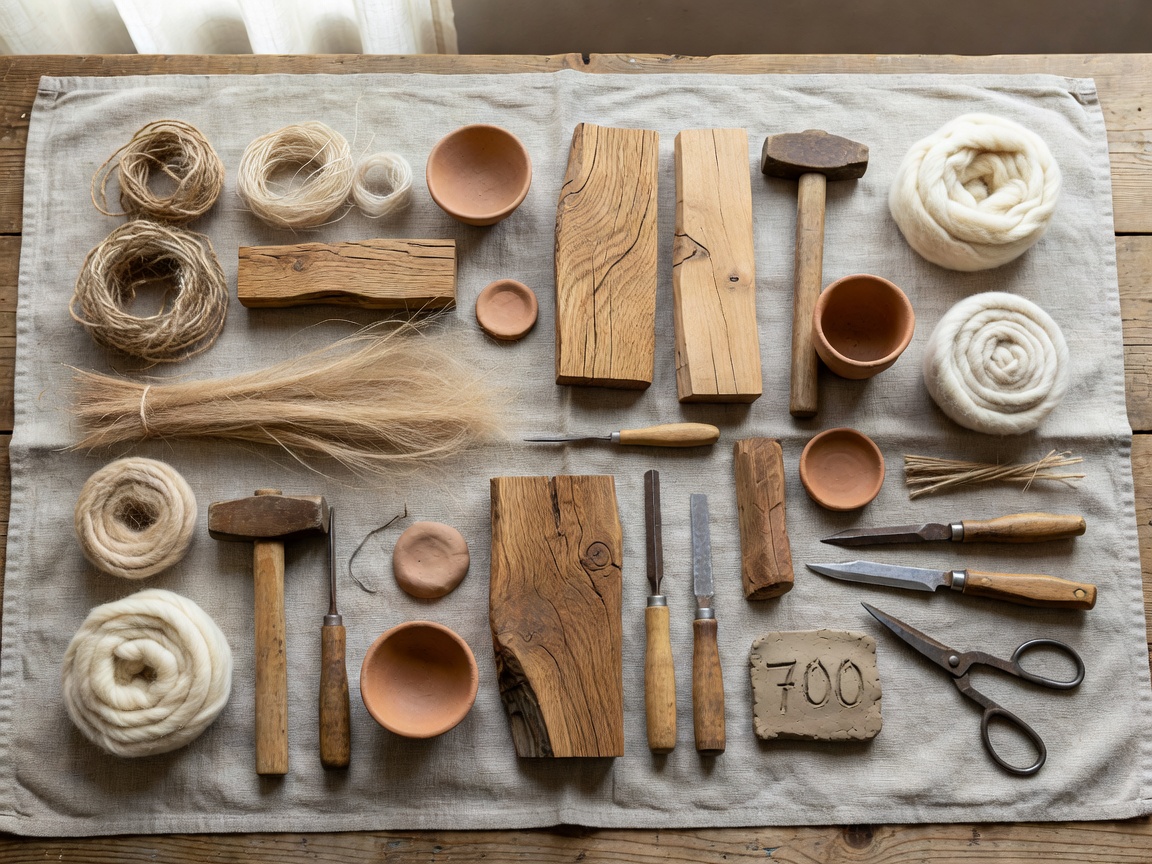
Wood
Wood varies by species, grain, moisture and previous seasoning. It supports carving, joinery, turning, furniture and tool handles. Beginners benefit from straight-grained stock and a clear explanation of defects. Store timber dry and stable. Blades must suit the cut and be maintained according to workshop guidance.
Clay
Clay has plasticity when workable and changes through drying and firing. Earthenware and stoneware are not interchangeable. Course providers should identify the clay body, preparation supplied, drying time and firing arrangements. Keep clay dust controlled; follow studio ventilation and cleaning rules rather than sweeping dust into the air.
Wool, linen and cotton
Wool offers warmth, elasticity and fibre scales. Linen is strong, cool and relatively inelastic. Cotton is versatile and widely traded, with many industrial and handcraft histories. These fibres support spinning, weaving, knitting, embroidery and dyeing. Humidity, pests, light and folding affect storage. Samples help learners compare twist, sett, handle and shrinkage.
Natural dyes
Dye sources and mordant systems vary widely. Colour depends on fibre, water, preparation and exposure. A responsible course explains safe handling, labelling, ventilation and disposal. Do not assume that a natural source is non-toxic. Beginners should use the provider’s tested process and protective equipment.
Stone and metal
Stone selection considers hardness, grain, fracture and dust. Metal selection considers alloy, thickness, temper and finish. Both require suitable tools and controlled workspaces. Metal may involve heat, fumes or sharp edges; stone may involve impact and airborne particles. Learn under qualified supervision and follow local workshop rules.
Leather
Leather differs by animal, tanning method, thickness and finish. It can be cut, punched, stitched, laced, moulded and tooled. Use a stable cutting surface and tools supplied or approved by the tutor. Store it away from excess humidity and direct sunlight.
Traditional hand tools
Hand tools extend force and precision: awls, knives, chisels, rasps, shuttles, needles, planes, punches and mallets all have specific jobs. Compatibility is more than size; edge geometry, handle fit and material direction matter. Maintenance should follow the maker’s instructions. Never modify a tool or bypass guards without qualified approval.
Good for
- Choosing a first material with realistic demands.
- Preparing questions about supplied tools and consumables.
- Building a small reference kit without overbuying.
What to know
- Material storage affects quality and safety.
- Tool choice follows material behaviour.
- Hazardous processes belong in supervised workshops.