Woodworking
Woodworking ranges from green-wood carving and joinery to turning, coopering and spoon carving. Grain direction, moisture and species determine tool response. Regional buildings, furniture forms and forestry shaped local practice, but no single modern border contains these histories.
Ceramics
Ceramics combines clay preparation, forming, drying, surface treatment and firing. Wheel throwing is only one route; slabs, coils, moulds and hand building are also established methods. Clay bodies and firing systems vary. A course should explain whether work is earthenware, stoneware or another ceramic body.
Weaving and embroidery
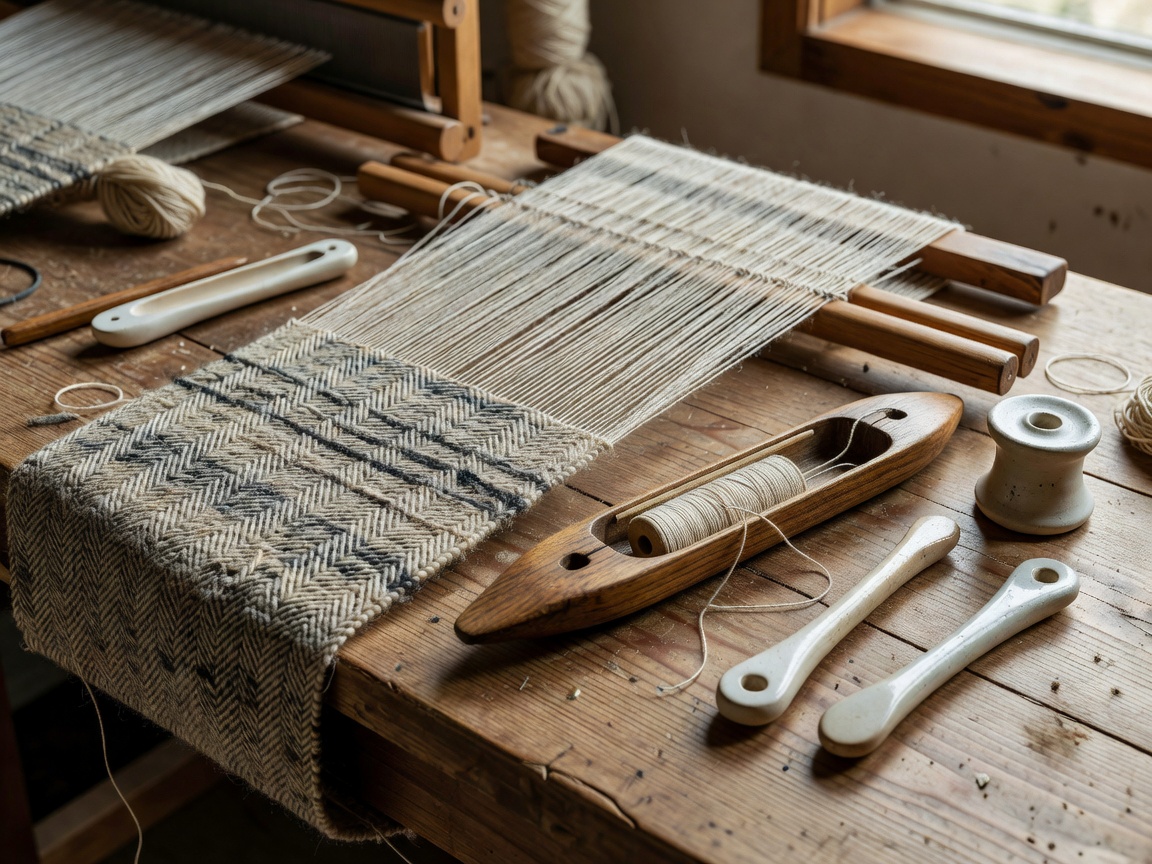
Weaving interlaces warp and weft under controlled tension. Loom structure changes the possible cloth. Embroidery adds thread to a prepared surface through counted, drawn or free stitching. Regional pattern languages often travel through trade, migration and shared textile production, so attribution requires care.
Natural dyeing
Natural dye practice uses plant, insect, mineral or waste-derived colour sources, with results affected by fibre, water, preparation and light. The term covers many recipes and historical contexts. Safe teaching should address ventilation, handling, wastewater and appropriate protective equipment without treating every plant as harmless.
Metalworking
Blacksmithing, silversmithing, tinsmithing and decorative sheet work use different temperatures, tools and forms of control. Forging moves heated metal; chasing and repoussé shape sheet; wirework bends and joins thinner stock. Instruction must be supervised and workshop-specific because heat, fumes and sharp edges create serious hazards.
Leatherwork and basketry
Leatherwork may involve cutting, stitching, lacing, tooling or moulding. Leather type determines stretch and finish. Basketry uses flexible splints, reeds, willow or other fibres. Splitting, soaking and weaving require steady control. Material availability and local land management influence regional forms.
Stonework and decorative methods
Stone carving depends on hardness, grain, fracture and tool choice. It is slow, physical work with dust and impact risks. Decorative techniques such as marquetry, painted furniture, tile patterning and gilding can cross material categories. Their histories are often connected to buildings, domestic objects and religious or civic commissions.
Good for
- Comparing processes before selecting a course.
- Identifying which material behaviour interests you.
- Separating a technique from its simplified tourist label.
What to know
- Regional traditions are rarely isolated.
- Technique names can describe several variants.
- Qualified supervision matters for heat, dust and sharp tools.